February 1st,2026
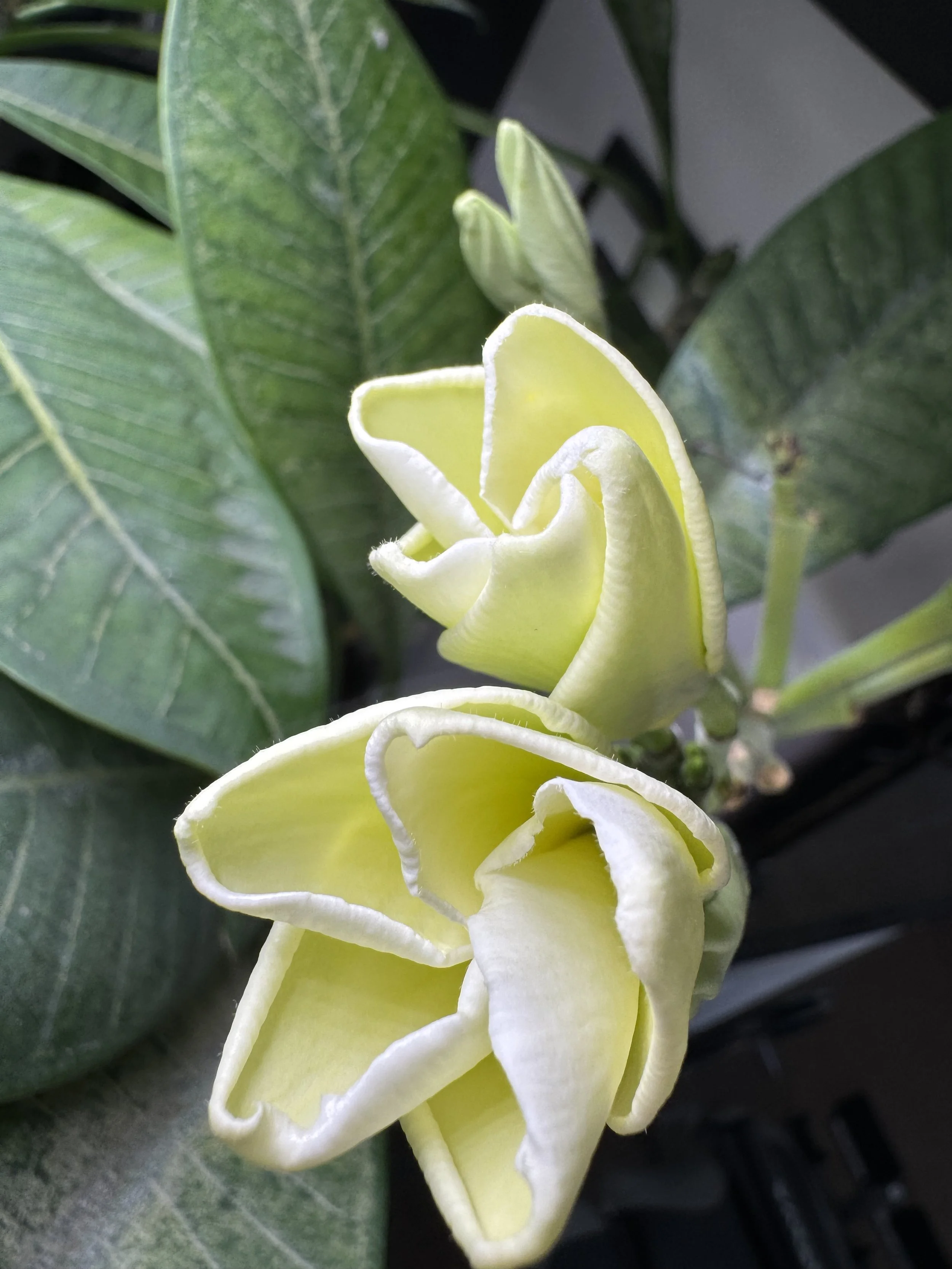
Celadine Plumeria beginning its spring bloom season
Well, it’s February 1st, 2026. While the rest of the world is lamenting the loss of summer, those of us who love plants, or have an indoor jungle, and possibly garden, may have already immersed ourselves in thoughts of spring, or are relishing the vibrant greens of our houseplants. I know I am, as I marvel at the resilience of tropical plants wintering inside my home. Including my Plumeria Tree. I took the picture above today. My 7-foot-tall plumeria tree has not only put on seed pods, but is starting an unexpected blooming cycle, inflows(floral spears) from the previous summer that still linger on the plant are developing and opening flowers, and soon my entire home will smell of the floral scents I always associate with Hawaii. This particular tree is about 3 years old, she resides in a 25-gallonblack plastic pot that led a previous life as a cattle mineral bucket( you don't really need glamorous pots). Plants will grow anywhere.
With the setting of seed pods and flowers, I always make sure to lightly fertilize when watering. Since the tree is putting out extra effort, I watered a bit more than normal (which is about 1 gallon every two weeks), and I added the water from a steeped banana peel. The water provides nutrients and nitrogen to the tree, helping it replenish its reserves. As the tree puts on more and more flowers, I will add more fertilizer in the form of a liquid seaweed, and fish paste fertilizer that gets mixed with the regular 3 gallons of water she will get. I ensure that she does not stand in water by elevating her pots’ drainage holes above the ground with 2 or 3 bricks. This allows the pot to drain out the excess water and prevents root rot. Remember, Plumerias are island plants, and live in rocky, sandy soil that drains exceedingly well, so no standing water.
I recently sprayed all of my plants with neem oil as I noticed some spider mite webs. This happens when you bring plants in and out of the house, so be prepared. If you don’t have neem and a spray bottle on hand, you can always use a bottle of dish soap diluted in water. It softens the shells of the mites, and they die. I happened to have diluted neem already in the bottle, so I used it.
The flowers you see in the picture above are not fully open and still retain their yellow-green tint. As they open fully, they will lose that tint and become white with yellow centers, which is the flower color of Celadine Plumerias. Each variety has its own color, and some have been bred that way, while others come to their color naturally due to the variety. Celadine Plumerias are the most common variety, and the color is natural, not bred. Celadine Plumeria are seen often planted around resorts, and in yards, being the least expensive and most common for of plumeria.
Have a Great Day, and enjoy your plants!
We will have videos coming to our you tube channel soon, and you can also find us on Pinterest and Facebook at Aloha Habitat.